

When the Mountains Became an Unplanned Stage
The mountains weren’t expecting a performance that day.
Trees stretched across the landscape in layered greens and browns, the air carried that easy summer warmth, and the stairway winding through it all looked like just another quiet path meant for slow, peaceful walks.
Then Yo and YV arrived.
And just like that peaceful turned performative.
The Entrance That Changed the Mood
Yo stepped in first, wearing a bold red-and-black checkered jacket paired with sleek black leggings and ankle boots. YV followed close behind in a dark blue fitted top with matching black leggings and ankle boots.
Together, they didn’t look like hikers.
They looked like a duo sent to upgrade the entire scenery.
The Music That Wasn’t There (But Definitely Was)
No speakers. No playlist.
But somehow, the music existed.
And they heard it clearly.
Without hesitation, they moved.
The Stairway Becomes a Stage
One step up. One step down.
Their movements weren’t rehearsed but they didn’t need to be.
Feet tapped in rhythm. Hands moved like they were guiding invisible sound through the air. Their energy reshaped the quiet space into something alive.
The stairway was no longer just a path.
It was a stage.
Unplanned but In Sync
Hair flips happened.
Not necessary.
Completely effective.
Yo spun mid-step slightly risky, almost off-balance but recovered so smoothly it felt like choreography.
YV answered instantly, adding a bounce to her steps that turned the moment into a full duo exchange.
Not just dancing.
Conversation through movement.
The Mountains Watch Quietly
Behind them, the mountains stayed still.
The trees didn’t react.
The air didn’t interrupt.
But something shifted.
The vibe moved even if nothing else did.
The Pause That Meant Something
At a landing on the stairs, they stopped.
Not from exhaustion but intention.
They looked at each other.
No words.
Just a shared understanding.
The Final Pose
And then together they struck a pose.
Arms positioned. Posture strong. Expressions focused.
It carried the energy of something ancient, something dramatic something that didn’t quite follow any real reference, but felt iconic anyway.
For a second, everything held still.
The mountains.
The air.
The moment.
Breaking the Scene
Then came laughter.
Unfiltered. Immediate. Real.
Because no matter how powerful the pose looked, they both knew the truth.
This wasn’t about perfection.
What It Was Really About
It was about turning a random stairway into a memory.
About moving without overthinking.
About letting a quiet place become something expressive even if just for a moment.
And somehow, without asking permission, making the mountains part of the performance.
„Der ganz normale Wahnsinn“
„Der ganz normale Wahnsinn“ war eine deutsche Fernsehserie von Helmut Dietl (Regie und größtenteils auch Drehbuch), die 1979–1980 in 12 Folgen (je ca. 45 Minuten) im Bayerischen Fernsehen (ARD) ausgestrahlt wurde. Es handelt sich um eine urbane Beziehungs- und Alltagskomödie mit viel schwarzem Humor, die das Münchner Milieu der späten 1970er zeigt.
Hauptfiguren
- Maximilian „Maxi“ Glanz (Towje Kleiner): Frisch geschiedener Journalist und frustrierter Schriftsteller, der eine Kummerkasten-Kolumne schreibt und an einem Buch arbeitet.
- Gloria Schimpf (Monika „Mo“ Schwarz): Ebenfalls frisch geschieden, selbstbewusst und seine große Liebe.
- Lino Gailing (Helmut Fischer): Der unverbesserliche „Stenz“ (Playboy) und bester Freund von Maxi – eine Art Vorläufer zu seinem späteren „Monaco Franze“.
- Weitere Rollen: Barbara Valentin (Aline), Ilse Neubauer, Kurt Raab u. v. a. (viele prominente Gastauftritte).
Stories / Handlung
Die Serie erzählt in episodischer Form (die Folgen heißen einfach „Erstes Kapitel“, „Zweites Kapitel“ usw.) den chaotischen Alltag des Paares Maxi und Gloria. Sie lernen sich am Tag ihrer jeweiligen Scheidung bei einem Auffahrunfall kennen und stürzen sich in eine turbulente On-Off-Beziehung.
Typische Themen und Geschichten:
- Alltagskatastrophen, Umzüge, Wohnungschaos, Geldprobleme.
- Konflikte zwischen Freiheit (nach der Scheidung) und dem Wunsch nach Beziehung.
- Eifersucht, Ex-Partner, Freunde, die mit guten Ratschlägen dazwischenfunken.
- Maxis gescheiterte Versuche, als Schriftsteller erfolgreich zu werden (inkl. Jobverlust, Pleiten, Theaterstück-Erfolg und Geldverschwendung).
- Spätere Folgen gehen in absurdere Richtungen (z. B. ein Hochstapler in Cannes, ein futuristisches Finale im Jahr 2014 mit künstlichen Gehirnen).
Es ist eine humorvolle, teils satirische Momentaufnahme des Münchner Großstadtlebens – Beziehungsstress, Karrierefrust und „ganz normaler Wahnsinn“ des Alltags. Es gab auch eine gekürzte Kinofassung unter dem Titel „Der Durchdreher“.
Titelmusik
Die offizielle Titelmusik der Serie heißt „Nerves“ von Jackie Shay (auch Jackie Shay Band). Das ist ein instrumentaler, rockiger Track aus dem Jahr 1979, der perfekt zur energiegeladenen, chaotischen Stimmung der Serie passt.
Es gibt auch andere Songs in der Serie (z. B. italienische Hintergrundmusik in einer Folge), aber „Nerves“ ist die eigentliche Titelmelodie. Falls du den Song suchst: Es gibt Uploads auf YouTube (z. B. „JACKIE SHAY – NERVES“ mit Hinweis auf die Serie). Die Serie gilt als frühes Highlight von Helmut Dietl und hat Kultstatus, auch wenn sie weniger bekannt ist als „Monaco Franze“ oder „Kir Royal“.
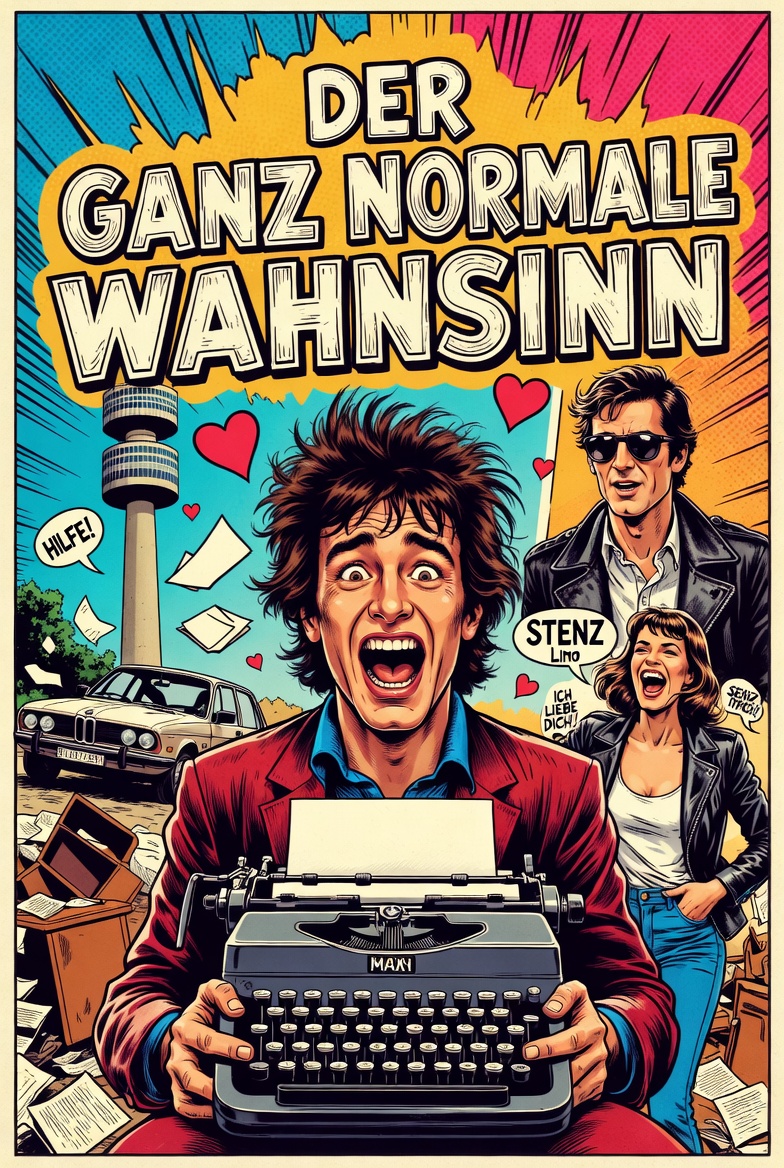
“The Usual Madness”
“The Usual Madness” was a German television series by Helmut Dietl (director and largely screenwriter), broadcast in 1979–1980 in 12 episodes (approximately 45 minutes each) on Bavarian Television (ARD). It is an urban comedy of manners and everyday life with plenty of dark humor, depicting Munich in the late 1970s.
Main Characters
Maximilian “Maxi” Glanz (Towje Kleiner): A recently divorced journalist and frustrated writer who writes an agony aunt column and is working on a book.
Gloria Schimpf (Monika “Mo” Schwarz): Also recently divorced, self-assured, and his great love.
Lino Gailing (Helmut Fischer): The incorrigible playboy and Maxi’s best friend – a kind of precursor to his later “Monaco Franze.”
Other roles: Barbara Valentin (Aline), Ilse Neubauer, Kurt Raab, and many others (numerous prominent guest appearances).
Stories / Plot
The series tells the story of the chaotic everyday life of the couple Maxi and Gloria in episodic form (the episodes are simply titled “Chapter One,” “Chapter Two,” etc.). They meet in a fender bender on the day of their respective divorces and embark on a turbulent on-again, off-again relationship.
Typical themes and storylines:
Everyday disasters, moving house, apartment chaos, money problems.
Conflicts between freedom (after the divorce) and the desire for a relationship.
Jealousy, ex-partners, friends interfering with unsolicited advice.
Maxi’s failed attempts to become a successful writer (including job loss, bankruptcies, a successful play, and wasted money).
Later episodes take more absurd turns (e.g., a con man in Cannes, a futuristic finale in 2014 featuring artificial brains).
It’s a humorous, sometimes satirical snapshot of Munich’s big-city life—relationship stress, career frustration, and the “perfectly normal madness” of everyday life. There was also a shortened theatrical version titled “The Nutcase.”
Theme Music
The official theme song of the series is “Nerves” by Jackie Shay (also known as the Jackie Shay Band). It’s an instrumental, rock-infused track from 1979 that perfectly captures the energetic, chaotic atmosphere of the show.
There are other songs featured in the series (e.g., Italian background music in one episode), but “Nerves” is the main theme song. If you’re looking for the song, you can find it on YouTube (e.g., “JACKIE SHAY – NERVES” with a reference to the series). The series is considered an early highlight of Helmut Dietl and has cult status, even if it is less well known than “Monaco Franze” or “Kir Royal”.

+ + + siyax.org – nerves – der ganz normale wahnsinn + + +